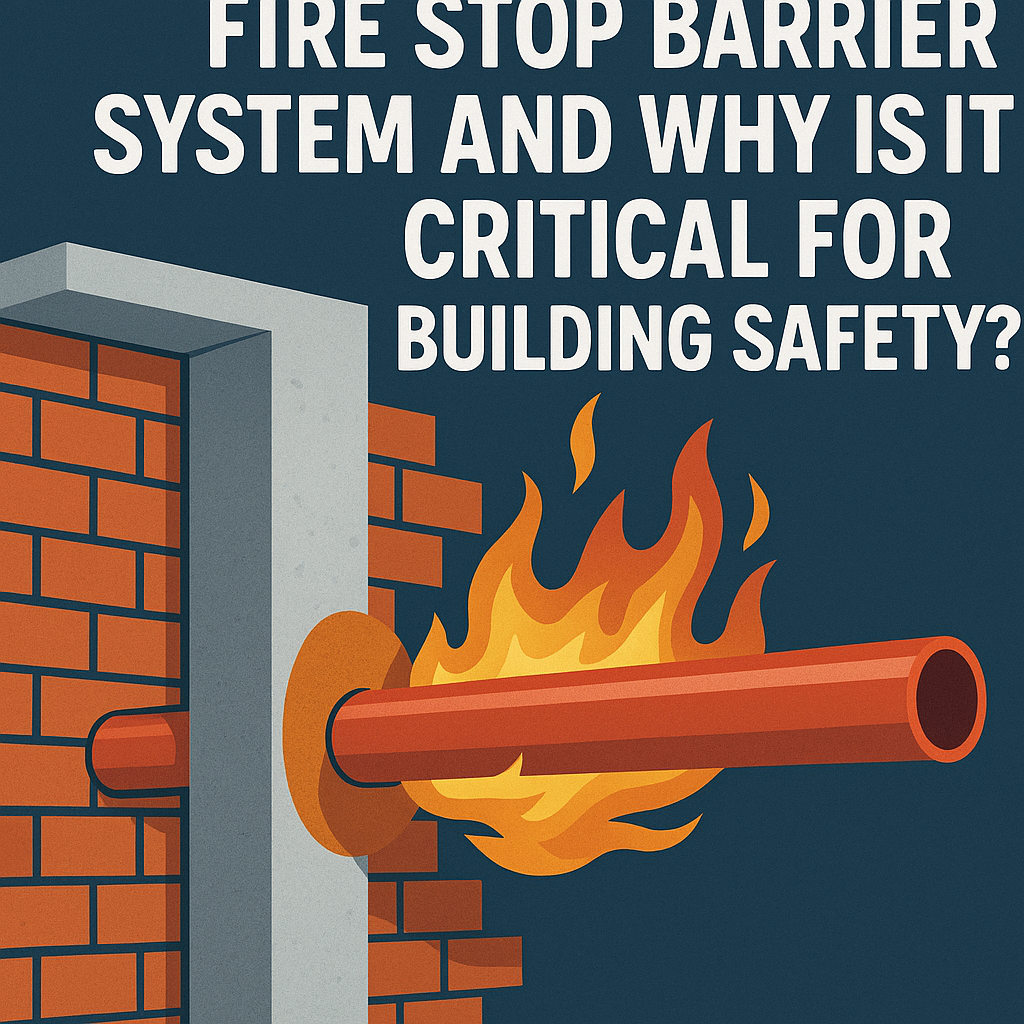
The safety of buildings is considered the highest priority in contemporary buildings; nevertheless, fire can be classified as one of the most dangerous threats to human lives and property. Alarms and sprinklers are essential, but what many people do not realize is that containment is important. This is where a fire stop barrier system will be very important. It is also a component of a larger passive fire protection system that is aimed at retarding the speed of flames, smoke, and toxic gases spread across a building.
What is a Fire stop barrier System?
A fire stop barrier system is a system comprising of special materials and assemblies that are installed in walls, floors, ceilings, and service penetrations to close the gaps and joints. These obstacles ensure that fire and smoke do not move through the apertures formed by pipes, cables, duct and structural joints.
In any construction, be it residential, commercial or industrial, there are many penetrations needed in terms of electrical wires, plumbing, and the HVAC system. These openings are sources of quick spread of fire without appropriate sealing. An installed fire stop barrier system bridges these gaps of vulnerability, ensuring the integrity of fire-rated walls and floors.
Passive fire protection comprehension
Passive fire protection systems do not require any manual or mechanical implementation. Passive systems are incorporated into the building unlike sprinklers or fire alarms. They are lifeless until a fire takes place and then they are resistant to heat and flame to contain the destruction.
The important elements of passive fire protection system are:
- Fire-rated walls and floors
- Fire doors and dampers
- Sealants and fire-resistant materials with intumescent properties.
- Fire stops barrier systems
All these elements combine to form multiple defenses that delay the advancement of fire, allowing occupants to evacuate as well as emergency responders to respond.
The use of Fire Compartmentationation.
A fire compartmentationation system subdivides a building into small parts that are fireproof known as compartmentations. The compartmentations are engineered to confine the fire in a restricted locality within an estimated period of time- normally 30, 60, 90 or 120 minutes as per building regulations.
This compartmentationation is necessary and is done through fire stop barrier systems. Although walls and floors may have been fire-rated, uncovered service penetrations may damage the whole system. It must be noted that fire stopping is important to ensure the fire compartmentation system works as it was designed to, and the structural damage is minimised, and the fire cannot spread out of control.
The Importance of Building Safety
- Life Safety: Having fire and smoke enhances evacuation time to a great level. Majority of fire related death causes include smoke inhalation and not burns. Fire stops systems prevent smoke migration and offer protection to the escape pathways like corridors and stairwells.
- Property Protection: The consequent decrease in the speed of fire is what reduces the total damage to the structure and also limits the costly re-building or repair.
- Regulatory Compliance: Fire compartmentationation and passive fire protection measures are required by the building codes and fire safety regulations. Failure to comply would lead to fines, inspection failure and egregious liability.
- Business Continuity: In case of commercial and industrial properties, mitigation of fire damage will result in quicker recovery and less downtime of operations.
A fire stop barrier system is much more than a construction detail, it is a major component of an extensive passive fire protection system. Their maintenance saves lives, property and enforcement of safety standards by maintaining the integrity of a fire compartmentation system. Fire stopping cannot be considered an optional procedure in modern building design, as it is crucial to long-lasting safety and sustainability.
Read Also: Vermiculite coating thickness recommended for steel structure fire resistance